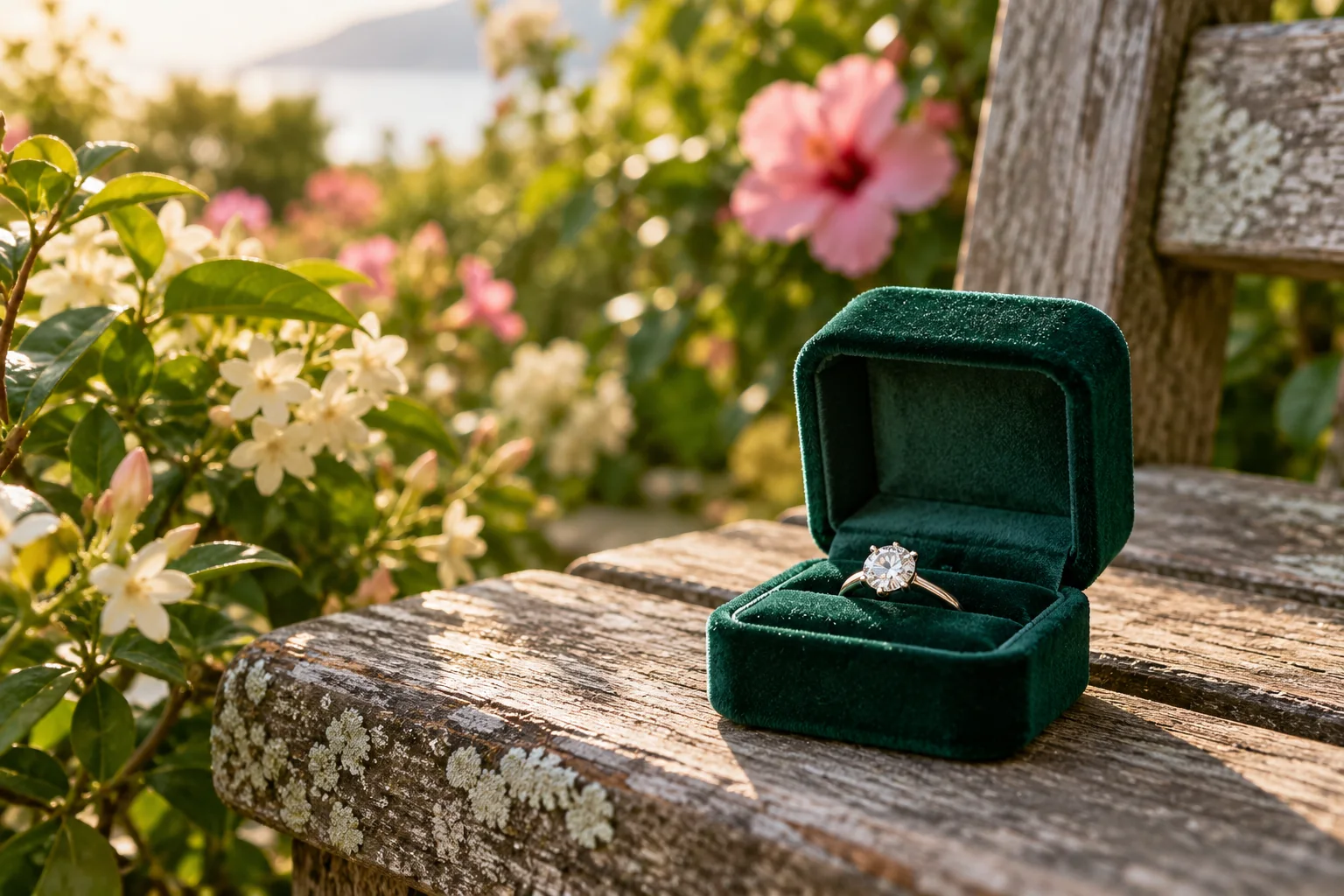
Engagements · At home / South Florida
An engagement ring guide for real life
Understand the 4Cs, natural and lab-grown diamonds, ring fit, reports and the questions to ask before buying.
Start with the person who will wear the ring. Their everyday habits, preferred style and your agreed spending limit matter more than a salary rule. A temporary proposal ring and a later shopping date can be a thoughtful choice.
A LITTLE PLAN. A LOVELY MEMORY.
Your four-step plan
- 01
Set your budget
Include the complete ring.
- 02
Choose the style
Fit their life and taste.
- 03
Compare evidence
Stone, setting and report.
- 04
Check the terms
Returns, sizing and care.
Choose the ring before chasing the stone
Ask about metal color, shape, a low or raised setting, and whether a wedding band needs to sit flush beside it. Notice how the ring feels with daily work, gloves or hobbies. A jeweler can measure the correct finger and discuss fit; do not assume a ring worn on another finger is the same size.
Budget for the center stone, setting, tax, any resizing and any optional cover you choose. There is no need to use a months-of-salary formula. Agree on a comfortable total before comparing rings.
Understand the 4Cs
For diamonds, the 4Cs are cut, color, clarity and carat weight. Cut concerns how a diamond is fashioned and how it interacts with light; it is different from shape. Carat measures weight, not a guaranteed visible diameter.
Compare similar stones under more than jewelry-counter lighting and ask the seller to explain the report for the specific stone. A higher number or grade does not automatically identify the ring you will enjoy most. Use GIA’s buyer education to understand the vocabulary before a sales appointment.
Natural, laboratory-grown or another gemstone?
Natural and laboratory-grown diamonds have essentially the same chemical composition and crystal structure, but different origins. Moissanite is a different gemstone, not a laboratory-grown diamond. Ask for clear written identification of what you are buying.
For a sapphire, ruby or another colored stone, ask about treatments, durability in daily wear and suitable care. An heirloom setting can be meaningful, but have a qualified jeweler inspect its condition before resetting a stone. Do not assume a ring’s resale value will match its purchase price.
A six-question buying checklist
Keep a written comparison for your final two or three options. A grading or identification report describes a stone; it is not a guarantee of future value.
- What is the stone’s origin, and are treatments disclosed?
- Which independent laboratory issued the report, and can I verify the report number?
- Does the document match the exact stone being sold?
- What is the complete price, including the setting and tax?
- What are the return deadline, custom-order exclusions, resizing terms and repair obligations?
- What care and inspection does this setting need, and what happens if a small stone loosens?
Make the decision together if that feels right
Try on rings without promising to purchase that day. Photograph favorites only with the store’s permission, note the specifications and take time to compare. Ask for all terms in writing.
If you want the proposal itself to be a surprise, agree on style and budget first or use a simple temporary ring. This guide provides shopping education, not a valuation, appraisal or investment recommendation.
Good to know
Are lab-grown diamonds the same as imitation stones?
No. Laboratory-grown diamonds are diamonds; simulants such as moissanite are different materials. Ask for clear origin disclosure and independent identification.
Must the ring be expensive?
No. Choose a comfortable budget and a ring the wearer likes. A modest ring, heirloom or temporary ring can be meaningful.
Sources & editorial notes
These are original editorial suggestions, not claimed firsthand reviews, a validated assessment or bookable packages. Linked sources support the venue, service and educational details; examples and scripts are ours. See the source-check dates on event cards. This guide was updated Nov 1, 2026; current terms can change.
- GIA buyer education ↗ (opens a new tab)
- GIA natural and laboratory-grown diamonds ↗ (opens a new tab)
- GIA online shopping checklist ↗ (opens a new tab)
- GIA colored stones ↗ (opens a new tab)
For full admission, accessibility, dietary, weather and cancellation requirements, check directly before booking. No paid placements or affiliate booking links are included.